A look at climate change
According to the World Health Organization, climate change currently constitutes the greatest threat to human health while also exacerbating social inequalities. Climate projections predict warmer temperatures throughout Québec, particularly in Nunavik. Extreme weather events will be more intense, last longer, and occur more frequently.
In Nunavik, climate change will result in:
- Increasingly frequent heat waves
- Thawing of the permafrost
- Conditions promoting coastal erosion
- More rain in the spring and fall
- Lengthier wildfire season
- Greater number of snowstorms
Heat
Permafrost thaw
Coastal erosion
Smoke from forest fires
Precipitations
Blizzards
Assessment of health risks
A comprehensive Health Impact Assessment Report is now available, and notably includes:
- Overview of the climate-related risks affecting Nunavik
- Analysis of current and projected health impacts
- Impacts on physical, mental, cultural and community well-being
- Vulnerable populations and greater inequalities
- Opportunities for adaptation and resilience
Impact of health risk on communities
Climate change affects communities across Nunavik in different ways. The level of risk and the health impacts vary depending on local environmental conditions, infrastructure, access to resources and community realities.
Inequalities in the face of climate change / groups at risk
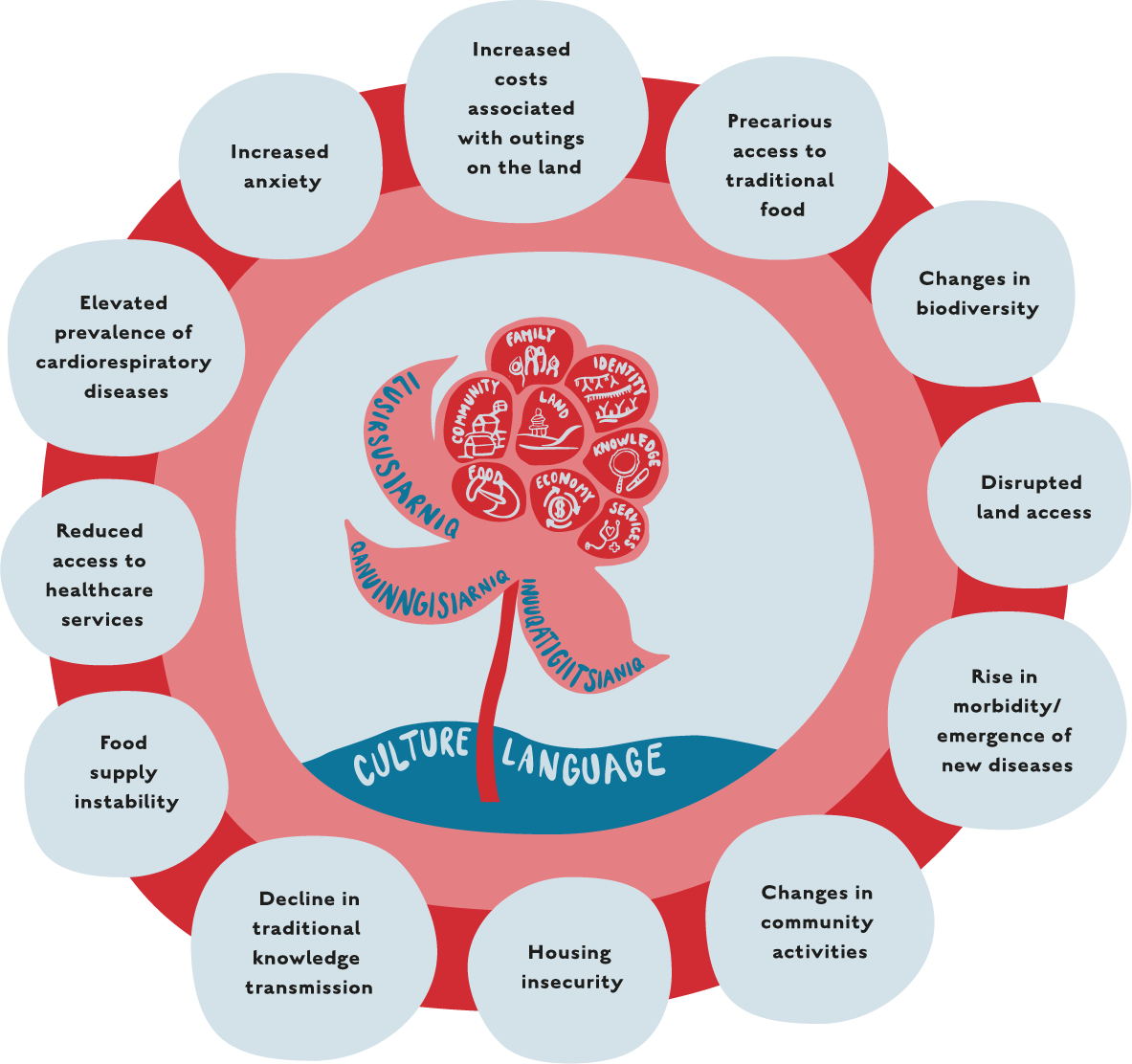 While climate change affects everyone, some people may be more vulnerable to its impacts, including:
- Young children
- Elders
- Pregnant women
- People living with chronic illnesses
- People with asthma or other respiratory diseases
- People who work outdoors or on the land
Understanding these vulnerabilities can help communities and decision-makers identify priorities to foster greater adaptation and resilience.
Explore the health impacts of each climate risk
The assessment highlights how climate risks can impact:
- Physical health and safety
- Mental health and well-being
- Food and water security
- Access to the land and traditional activities
- Community infrastructure and essential services
- Exposure to infectious and zoonotic diseases
Download the comprehensive report: View the summary of the impacts of the different risks on the health of the population: |
Next steps: Developing an action plan
The Assessment of Climate Risks to Nunavimmiut Health and Well-Being Report, while representing an important milestone, is but the beginning of the adaptation journey.
The next phase of the project will focus on developing a Climate and Health Action Plan to guide priorities and interventions over the coming years. This process will be implemented in conjunction with communities, organizations and regional partners.
The action plan will:
- Identify priority actions designed to reduce health risks
- Strengthen community resilience and preparedness
- Support adaptation across health and social systems
- Establish short-, medium- and long-term objectives
Contact the team
Environmental Health team: environmental.health.rr17@ssss.gouv.qc.ca
Useful links
- Makivvik report: Nunavik Climate Change Adaptation Strategy – ᒪᑭᕝᕕᒃ – Makivvik/
- ITK strategy: https://www.itk.ca/national-inuit-climate-change-strategy/ (English and Inuktitut)
- INSPQ Web page on climate change: https://www.inspq.qc.ca/changements-climatiques (French only)
With the financial participation of:

